01
Prefer a legible seam to a heroic workaround.
Interfaces between people, services and data should be apparent enough to inspect, test and alter without relying on one person’s memory.
Full-stack engineering / 01
Xeloparin Build Yard helps product teams shape and assemble web systems that have to keep working after the launch meeting ends.

We work where product behavior, data, delivery and teams meet.
BUILD_YARD / WEB SYSTEMS / PRODUCTION-MINDED

02 / SYSTEM SEAM
Choose a bolt-tab to inspect a working seam. We make decisions at the points where a product can become fragile, opaque or hard to change.
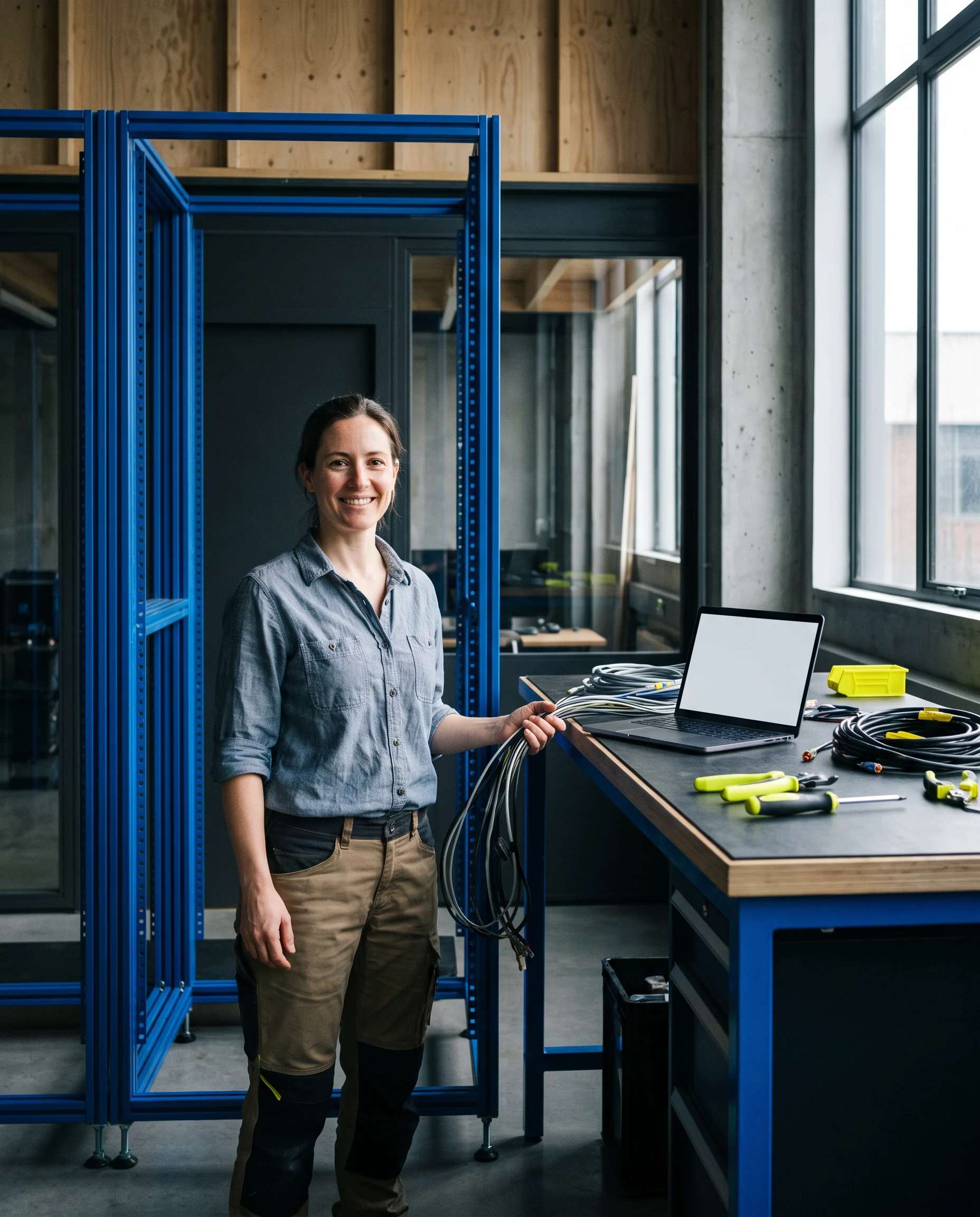
Seam 01 / Context
We name the users, operations, legacy constraints and decision points before deciding what to build. The result is a compact work note with real choices, not a generic requirements document.
Interfaces between people, services and data should be apparent enough to inspect, test and alter without relying on one person’s memory.
We reduce uncertain scope through concrete paths and observable decisions, rather than supplying a broad surface that has not earned its complexity.
Release, failure and support are product concerns. A useful system explains how it will be changed and cared for after the first version exists.
Notes, choices and unresolved questions deserve a home. We aim for continuity, not a ceremonial reveal or an unexplained code drop.
04 / THE BUILD YARD
Product work gets clearer when the artifacts live close to the decisions: diagrams beside code, release questions beside the behavior they affect.
 Review surface / liveMaterial / decision recordOpen questions → named
05 / ASSEMBLY LADDER
The sequence flexes around the work, but it gives everyone a shared idea of what needs to become true before the next decision is worthwhile.
Map the actual users, existing materials, risks and decisions that are already shaping the work.
Choose a small technical and product frame that allows important unknowns to become visible.
Build and review the thin vertical paths that connect the experience to its underlying behavior.
Document the operating path, make the change visible, and hand over the decisions that matter.
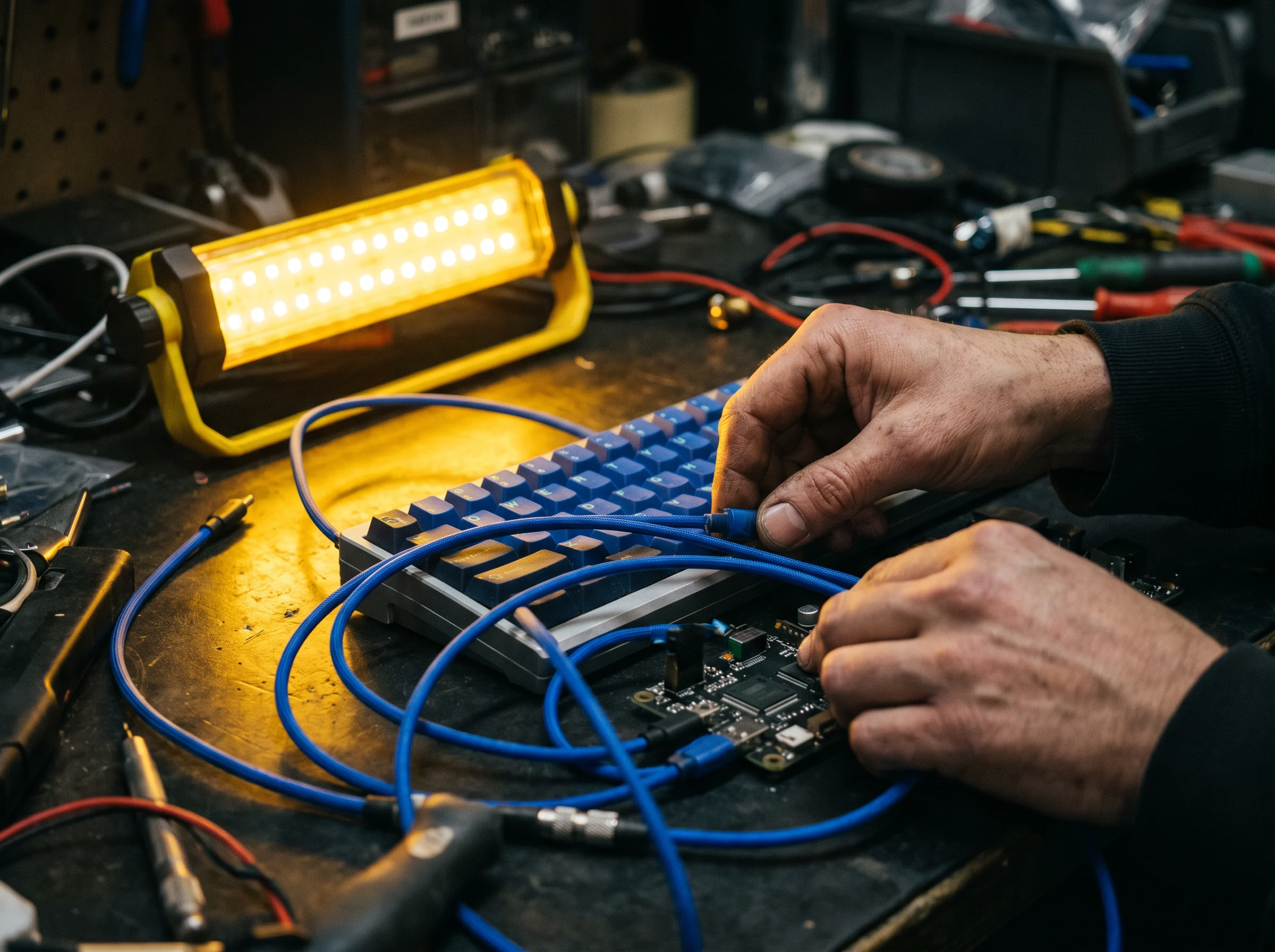
Bench principle: we do not treat the interface, service logic and release path as separate projects. The small connections are where reliability either accumulates or leaks away.
 BENCH REVIEW / NOT A PERFORMANCE
06 / BENCH REVIEW
07 / SCOPE GAUGE
Scope is not a pile of disconnected features. It is an agreement about which system parts deserve attention now and how they relate to one another.
08 / WORKING WALL
We keep the things that ground a decision close at hand: a deployment constraint, a support pattern, a wireframe, a data sample or a question that has not been answered. This wall is about the work itself—not testimonials, claims or borrowed authority.

What needs a decision before it turns into accidental policy?
Small, reviewable behavior before broad surface area.
The part someone needs at 09:12 on a Tuesday.


09 / DEVELOPER HANDOFF
Handoff is a technical event. It deserves the same care as the interface: orient people quickly, preserve the decision trail, and name what still needs attention.
10 / FAQ
There is no promise of a universal delivery shape. These answers describe how we approach a serious engineering conversation.
11 / DISCOVERY LINE
Tell us what is changing, what cannot break, and who needs to be in the room. A little honest context is more useful than a polished request.
Your browser has not sent this information anywhere. If you would like to begin a conversation, copy the essentials into an email to [email protected].